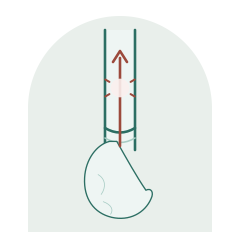

Affects: Small intestine3–6 h
Small intestinal bacterial overgrowth (SIBO)
An excess of bacteria in the small intestine, which should host few. They ferment food before it is absorbed, producing gas and malabsorption.
What happens
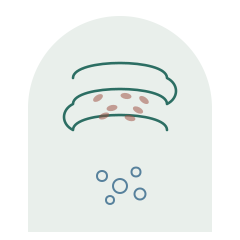
The small intestine normally keeps a low bacterial population thanks to gastric acid, the motility that sweeps its contents along, and the ileocecal valve. When one of those mechanisms fails, colonic bacteria colonise the small intestine. There they ferment carbohydrates before they can be absorbed, generating hydrogen or methane, hence the characteristic bloating that worsens after eating.
Why it appears
- Disorders of intestinal motility
- Previous abdominal surgery, adhesions or blind loops
- Prolonged use of proton pump inhibitors
- Diabetes, scleroderma, celiac disease
- Crohn disease or resection of the ileocecal valve
Diagnosis
The lactulose or glucose breath test is used, measuring hydrogen and methane. It is a test with limitations in sensitivity and specificity, so its result must always be interpreted alongside the clinical picture rather than in isolation.
Treatment and the key point
Treatment includes specific antibiotics and temporary dietary adjustments. But what decides the outcome is correcting the underlying cause: if whatever allowed the overgrowth is not resolved, SIBO recurs. That is why repeated antibiotic courses without investigating the origin are not a good strategy.
A caution
SIBO has become very popular and is sometimes self-diagnosed for any bloating. Abdominal distension has many possible causes, and several are more common. An orderly diagnosis is worthwhile before starting treatments or highly restrictive diets.
When something goes wrong
- Celiac diseaseAn autoimmune disease in which gluten triggers the immune system to attack the villi of the small intestine.
- Lactose intoleranceThe gut produces little lactase, the enzyme that splits milk sugar, and undigested lactose ferments in the colon.

- GERDAcidic stomach contents repeatedly rise into the esophagus because the sphincter between them does not close properly, irritating the lining.