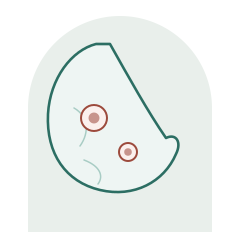

Affects: Rectum and anusvariable
Hemorrhoids
Swelling of the veins in the rectum and anus. Everyone has hemorrhoidal tissue; the problem appears when it becomes inflamed, bleeds or prolapses.
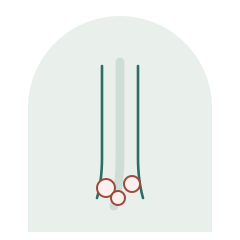
What happens
The anal canal has vascular cushions that help maintain continence. When pressure on them rises repeatedly, they engorge, become inflamed and may bleed or descend. Internal hemorrhoids usually bleed without pain; external ones hurt more, especially if they thrombose.
What encourages them
- Excessive straining and chronic constipation
- Spending long periods sitting on the toilet
- Pregnancy
- Sitting for many hours a day
- Repeated heavy lifting without proper technique
What genuinely helps
Almost all treatment consists of correcting the cause: softening stools with fibre and water so that straining is unnecessary. Warm sitz baths relieve symptoms, and topical creams can temporarily soothe. Topical steroids should not be used for weeks without medical direction.
When more is needed
Simple outpatient procedures exist, such as rubber band ligation, and surgical options for advanced cases. But if the bowel habit is not corrected, the problem returns.
The most important point
Do not self-diagnose. Rectal bleeding can also come from fissures, polyps, inflammatory disease or colorectal cancer. A proper evaluation either reassures you or catches something early.
When something goes wrong
- GERDAcidic stomach contents repeatedly rise into the esophagus because the sphincter between them does not close properly, irritating the lining.
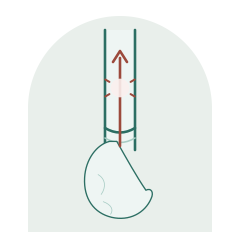
- GastritisInflammation of the stomach lining. It can be acute and short-lived or chronic, and in many cases the bacterium Helicobacter pylori is behind it.
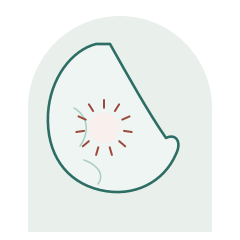
- Peptic ulcerAn open sore in the wall of the stomach or the first part of the small intestine, where acid has eroded the tissue.