
GERD
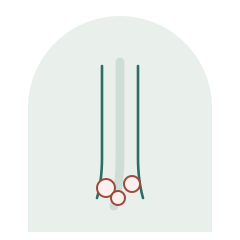
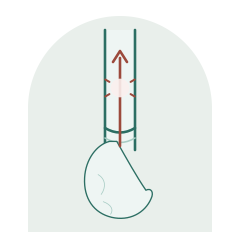
Acidic stomach contents repeatedly rise into the esophagus because the sphincter between them does not close properly, irritating the lining.
Main symptoms
- Burning rising from the chest
- Regurgitation of acid or food
- Dry night-time cough
- +2
The journey
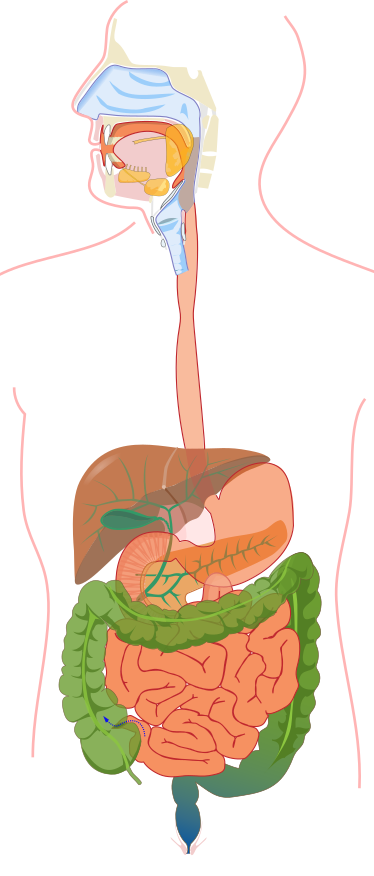
The digestive tract is a continuous nine-metre corridor running through the body. Walk it stretch by stretch and see what each chamber does.
Full journey: 24 to 72 hours

Where it all begins
Digestion starts before the first bite: the smell and sight of food already switch on the salivary glands. As you chew, your teeth break food into small particles and saliva moistens it, while salivary amylase begins breaking down starches. The tongue shapes the food into a bolus and pushes it toward the pharynx to be swallowed.
Did you know
We produce 1 to 1.5 litres of saliva a day. Chewing slowly is not empty advice: it improves digestion and your sense of fullness.

The muscular corridor
A tube about 25 centimetres long connecting the throat to the stomach. It absorbs no nutrients: its job is transport. It moves food by peristalsis, coordinated muscular waves that push the bolus downward even if you are lying down. At its lower end, the lower esophageal sphincter opens to let food through and closes again so acid cannot come back up.
Did you know
When that sphincter does not close properly, acid rises and reflux appears. It is the origin of GERD, the most common digestive disease.

The acid cauldron
A muscular pouch that can expand to hold nearly a litre and a half. Here food mixes with hydrochloric acid and pepsin until it becomes chyme, a semi-liquid paste. The acid does two jobs: it denatures proteins so they can be digested, and it kills most of the microorganisms that arrive with food. A layer of mucus protects the stomach wall itself from that acid.
Did you know
Gastric juice has a pH of 1.5 to 3.5, acidic enough to dissolve metal. When the mucus barrier fails, gastritis and ulcers appear.

Where life is absorbed
Seven metres coiled into three sections: duodenum, jejunum and ileum. This is the real centre of nutrition. Its wall is carpeted with villi and microvilli that multiply the absorptive surface to around 250 square metres, comparable to a tennis court. Sugars, amino acids, fats, vitamins and minerals are absorbed here and pass into the bloodstream.
Did you know
90% of nutrient absorption happens here. When the villi are damaged, as in celiac disease, nutritional deficiencies appear even with a good diet.

The chemical laboratory
These three organs never receive the food itself, yet without them digestion would be impossible. The liver produces bile and processes everything that is absorbed, filtering toxins and regulating blood sugar. The gallbladder stores and concentrates that bile, releasing it into the duodenum when fat arrives. The pancreas supplies enzymes that digest proteins, fats and carbohydrates, plus the insulin that controls glucose.
Did you know
The liver is the only internal organ able to regenerate: it can regain its full size after losing up to 70% of its mass.

Home of the microbiome
About a metre and a half long, its main job is to recover water and electrolytes from what remains. This is where the gut microbiome lives: trillions of bacteria that ferment the fibre we could not digest, produce short-chain fatty acids that feed the colon cells, and synthesise vitamins such as K and several B vitamins. That ecosystem shapes immunity, metabolism and even mood.
Did you know
You host roughly 100 trillion microorganisms, with more bacterial cells than your own human cells. Dietary fibre is their main food.

The end of the road
The rectum stores waste until the defecation reflex signals that it is time to eliminate it. Two sphincters, one involuntary and one under voluntary control, let you decide when. Repeatedly ignoring that signal is one of the most common causes of chronic constipation, and excessive straining encourages hemorrhoids and fissures.
Did you know
The full journey, mouth to anus, takes 24 to 72 hours in a healthy person. Transit that is much faster or much slower is a signal worth watching.
The 20 profiles
The 20 most common digestive diseases, grouped by the stretch they affect.
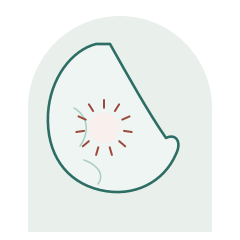
Inflammation of the stomach lining. It can be acute and short-lived or chronic, and in many cases the bacterium Helicobacter pylori is behind it.
Main symptoms
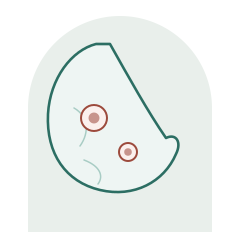
An open sore in the wall of the stomach or the first part of the small intestine, where acid has eroded the tissue.
Main symptoms
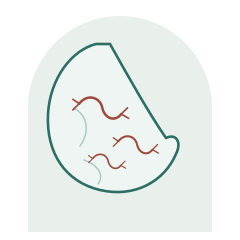
A bacterium able to survive in stomach acid. It colonises the gastric lining and is the main cause of chronic gastritis and peptic ulcer.
Main symptoms
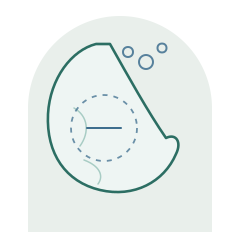
Persistent upper abdominal discomfort with no lesion to explain it. The stomach is not damaged, but it functions and perceives abnormally.
Main symptoms
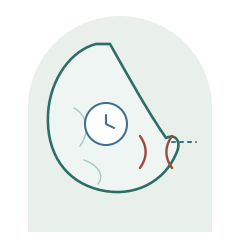
The stomach empties too slowly with no obstruction present, because the muscle or the nerves coordinating it are not working properly.
Main symptoms
An autoimmune disease in which gluten triggers the immune system to attack the villi of the small intestine.
Main symptoms
The gut produces little lactase, the enzyme that splits milk sugar, and undigested lactose ferments in the colon.
Main symptoms
An excess of bacteria in the small intestine, which should host few. They ferment food before it is absorbed, producing gas and malabsorption.
Main symptoms
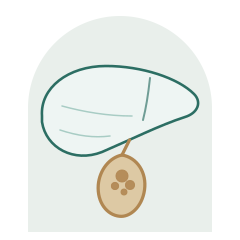
Stones that form in the gallbladder when bile becomes too concentrated. Many cause no symptoms; others block the bile duct and trigger an attack.
Main symptoms
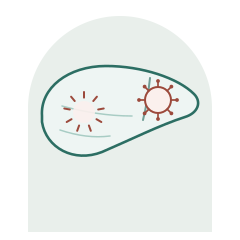
Inflammation of the liver. It can be caused by viruses (A, B, C, D, E), alcohol, medications, or metabolic or autoimmune causes.
Main symptoms
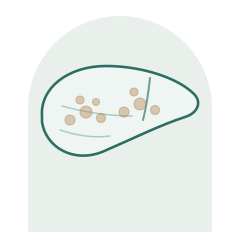
Fat accumulating in liver cells, almost always linked to insulin resistance, excess weight, diabetes or cholesterol abnormalities.
Main symptoms
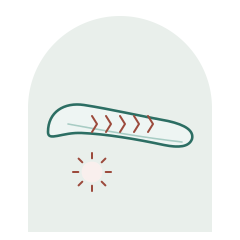
Inflammation of the pancreas, occurring when its own digestive enzymes activate inside the organ and damage it. It can be acute or chronic.
Main symptoms

A disorder of gut-brain interaction: the bowel works abnormally and is more sensitive, even though there is no visible damage to its structure.
Main symptoms
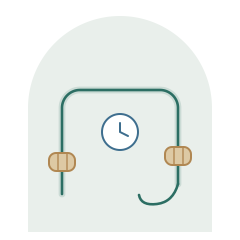
Infrequent, hard or difficult-to-pass bowel movements for at least three months, with straining and a sense of not being finished.
Main symptoms
Loose or liquid stools most of the time for more than four weeks. It is a symptom, not a diagnosis: the point is to find the cause.
Main symptoms
Chronic immune-driven inflammation of the digestive tract, running in flares and periods of remission. It includes Crohn disease and ulcerative colitis.
Main symptoms
Small pouches that form in the colon wall. Having them is diverticulosis; when one becomes inflamed or infected, it is diverticulitis.
Main symptoms

One of the most common cancers and, at the same time, one of the most preventable: it almost always begins as a polyp that takes years to transform.
Main symptoms